I bought my first proper zoom lens for my Sony a6400 mirrorless camera!
After a year of browsing the market, searching for the optimal focus length and weight ratio, while waiting for a good deal, I finally got the lens for my own personal use. The official name of the lens is:
SIGMA 100-400mm F5-6.3 DG DN OS | Contemporary
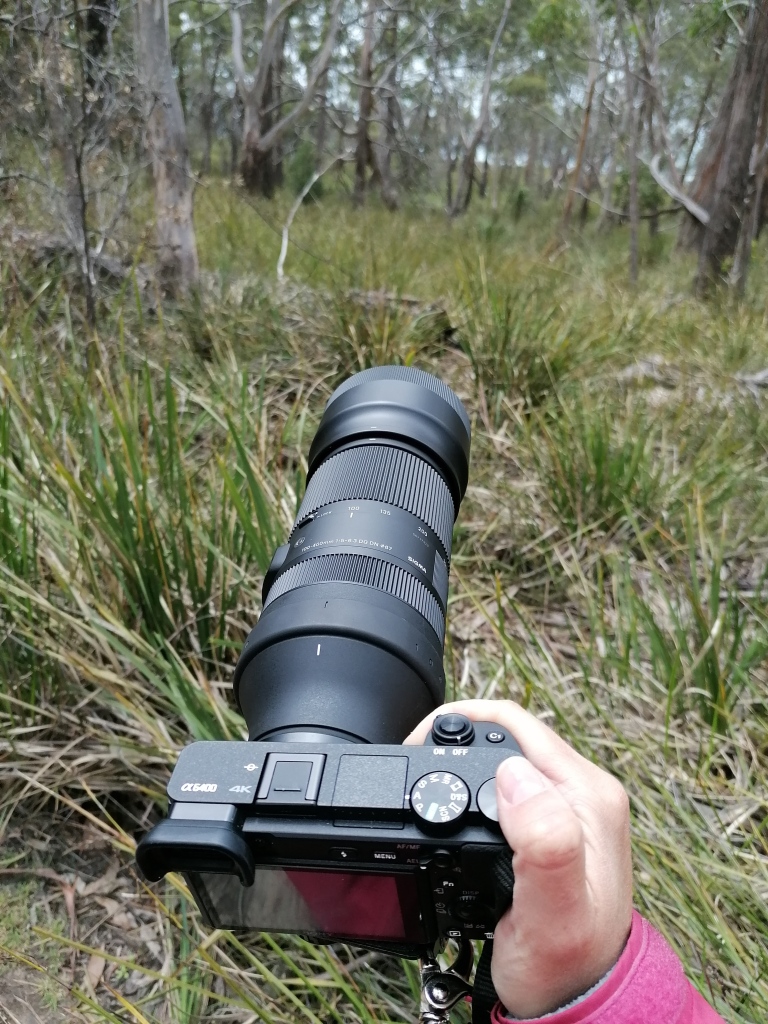
Being a birder does not always mean you have to have the best and most expensive equipment such as a telelens camera, or an expensive Swarovski telescope.
HOWEVER it does make a difference if you want to have clear-cut encounters with native wildlife to have a high quality pair of binoculars (binos). Everything else (telescope, telelens) is your second or third priority. Being restricted by a zoom lens of up to 135mm it was about time I expanded the lens collection.
Table of contents
- What I like about the Sigma 100-400mm lens F5-6.3 DG DN OS
- A local endemic bird – one of the large black cockatoos only found in Western Australia
- The bright blue sky and a familiar face – Budgerigar
- A beautiful green gem – the Australian Ringneck (also known as the twenty-eight parrot)
- The clean-up team – Little corella
- The class clown – Laughing kookaburra
- How to confidently and securely hike with a zoom lens for bird and wildlife photography: Crossbody camera strap
- Conclusion
What I like about the Sigma 100-400mm lens F5-6.3 DG DN OS
It was a great trade-off for me. The Sigma lens was much cheaper than the native Sony lenses. And I wanted a lightweight lens with enough zoom (up to 400mm), so my lens only weighs around 1100 gr.
I found the lens online for 1.145 USD (October 2022) in an online camera webshop, but also with a physical store where I made my purchase.
The Sigma 100-400mm lens has built in image stabilization, sharp and quick autofocus and works great with my mirrorless Sony a6400 camera. It is additionally possible to buy a USB dock to fit even faster autofocus settings from Sigma!
Another benefit is that the lenses designed for the Sony full-frame mirrorless system means you can benefit from the 1.5x crop factor. This means that my 100-400mm lens has the equivalence of 600mm!
If you continue reading I will walk you through some of my favorite bird encounters, which I was able to shoot with my new Sigma lens while in Western Australia 😊
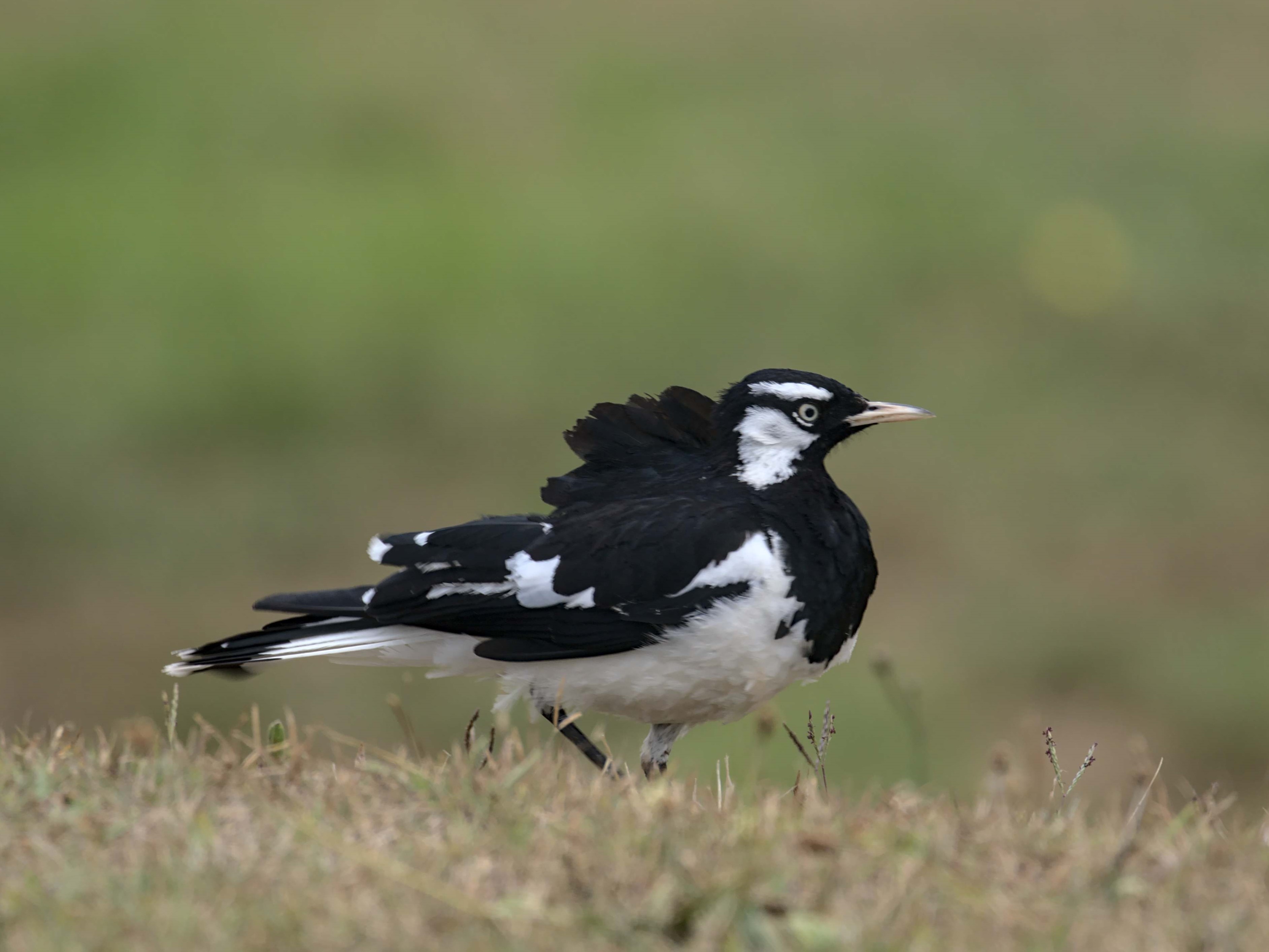
A local endemic bird – one of the large black cockatoos only found in Western Australia
The first encounter with a local endemic bird was with a Carnaby’s Cockatoo. It was the very first morning with the autocamper that we had rented.
And so, equipped with my new zoom lens and completely jetlagged waking up at 4 am (very handy for birdwatching though!), I emerged from the cozy camper and searched the area for new birds.
All the birds I saw that morning were ‘lifers’ – species that I saw for the first time!

The Carnaby’s Cockatoo is a threatened bird. It seemed to me like a very shy bird, that would shortly after this photo was taken this bird and what I assume was it’s partner fled the scene.
The Carnaby’s Cockatoo is threatened from habitat destruction and therefore lack of proper nest sites, as they nest in cavities of old tree trunks. They have learned to search for food among farmed crops such as cornfields. Later I would also see the Carnaby’s Cockatoo in Yanchep National Park on the last days we had the autocamper. Thankfully there are actions being taken to help prevent extinction of the species, as more nest sites are created.
Hopefully this beautiful cockatoo species will never go extinct!
The bright blue sky and a familiar face – Budgerigar
You may already have recognized the bird below. Yep – that’s a Budgerigar, a native Australian bird which naturally lives a free spirit nomadic life! They can congregate in large flocks and they move around according to food and water availability (hence the nomadic life).

This guy/girl I found alone chilling and enjoying the early morning sun atop a dead tree at Wooramel River Station in Western Australia. All wild budgerigars are green and yellow, and only the bred captive ones have the other color combinations you may know.
A beautiful green gem – the Australian Ringneck (also known as the twenty-eight parrot)
Like the Budgerigar above, I also found this parrot at Wooramel River Rest Station. This one was not very shy, and I was able to observe it for a while, meanwhile it was feeding on fresh green leaves. It was just the end of spring when we visited Australia, and the trees and bushes were still green while some flowers remained.

When I was reading about this species I learned that there are four subspecies of Australian Ring-necks, all belonging to different regions. I only managed to see this one, and this subspecies is apparently also nicknamed the ‘twenty-eight parrot’. What a peculiar name!
The clean-up team – Little corella
This pair of little corella were fearlessly defending this apparently very appealing dumpster in one of the campgrounds in Exmouth, Western Australia.
Their natural food source is grain and grass seeds, but also berries, nuts, roots and more!
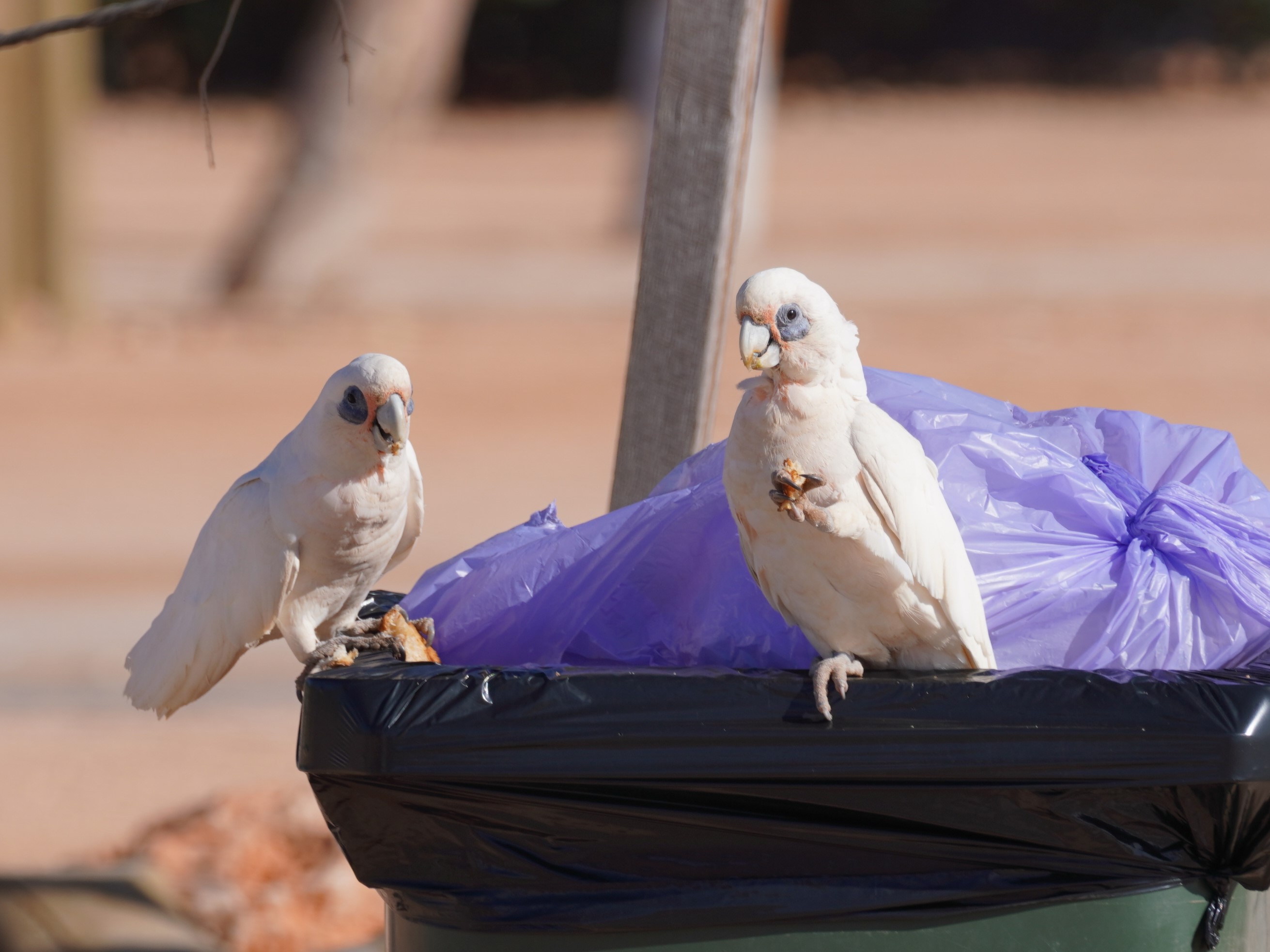
Little corellas are found throughout most of Australia, and it is the most wide-spread of the corella species. In south-west Australia the western corella is more common, and is restricted to only this region. In Sydney and south-east Australia you may also find the long-billed corella. Read more about little corella here.
The class clown – Laughing kookaburra
Another unmistakable bird is the laughing kookaburra, more commonly known as kookaburra. The kookaburra is another widespread bird found in parks, gardens and in their natural habitats in open forest and woodland. The range is throughout the entire eastern Australia where it is native, while it has been introduced to western Australia, Tasmania and New Zealand.

They are predatory birds, the ‘sit and watch’ kind that pounces on it’s prey, mostly insects, worms and crustaceans, but also amphibians, reptiles and even small mammals.
It belongs to the kingfisher family and is one of the larger species. They live in family groups of 4-8 birds, and their cackling sounds (hence, the laughing) is a territorial call to fence off other birds.
The two birds in my photo are mature birds, which is seen by their white-lower bill.
Again I am linking to the Australian Museum as they have a good short description about the laughing kookaburra. On Ebird.org you can see in which locations the laughing kookaburra has been observed, and hear their funny calls and sounds.
How to confidently and securely hike with a zoom lens for bird and wildlife photography: Crossbody camera strap
Right before traveling to Australia, I bought my first good zoom/telelens from Sigma. I didn’t have much time to practice before take-off to Oz, and I knew I had to sort something out to keep both my precious binoculars and my new equipment on me, because there would be tonnes of birds to document!!
But there was a solution to having all these gadgets hanging around me.

Using a cross body camera strap for hiking with a zoom lens
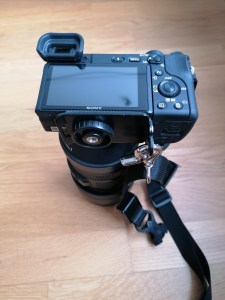
I found and purchased a cross-body strap on Amazon, which was fitted on one shoulder and then carried the camera with lens on my right hip (I am wearing it in the picture above!). I followed the instructions on the pictures on how to properly and securely attach the strap to the camera.
This would place my camera and the associated weight (which you would normally carry around your neck or in a bag) to only one shoulder, and then balanced the weight over on my right leg-side. But despite having the main carrying strap on one shoulder, I felt the weight was more evenly balanced between my left and right side.
You are not able to bolt freely around with the camera hanging like that, but most of the time during easy hikes I held the bottom of the lens with one arm and carried the lens under the arm for support. But it was still attached to the camera strap.
With this setup I was also able to have a backpack with water and snacks on me.
The only equipment you can’t carry with this setup and accessories is hiking poles. With all the expensive equipment hanging around your neck and shoulder, it is better to have your hands free (also how else will you take those photos or hold your binos up?)
The first few days with this setup felt a bit awkward, but eventually I made an order on how to ‘dress up’ to go birding every time.
Downside: The camera strap from Sugelary seemed like it was designed for men, because I found it was difficult to adjust it enough for my height. I think if you are a size small-medium woman or shorter than 1.70 meters this particular product may not be good for you.
How safe is it to hike with a camera strap and a heavy zoom lens?
Make sure you follow the instructions on your camera strap and put the extra security features on the camera, adding two different attachment points between the strap and the camera. One of the downsides was that the two attachment points are both on the camera itself, and not one on the lens.
I think it is important to check everyday that the screw is tight, and that everything that ‘clicks’ into place is still secure. I never dropped the camera or anything, and I felt safe wearing my precious camera with a cross-body strap 😊
Conclusion
And there you have it! My journey with the Sigma 100-400mm lens on the Sony a6400 has been a blast. From getting up close with the amazing Carnaby’s Cockatoo to hanging out with Budgerigars under that stunning blue sky, every moment felt like an adventure.
If you’re thinking about giving bird photography a shot, I can’t recommend this lens enough. It’s relatively lightweight, affordable, and pairs perfectly with my camera, making it super easy to get those close-up shots without too much hassle. Trust me, it makes the whole experience even more exciting!
So, grab your gear, head out, and make sure to share your own birdwatching tales. You never know what incredible sights you’ll stumble upon! Happy snapping! 😊

© All photos are my own unless stated and may not be used without permission.
None of the mentioned products, experiences or places in this post were sponsored.

 Traveling Female Ornithologist
Pingback: Mallorca: The amazing S’Albufera Nature Reserve in Alcúdia | Traveling Female Ornithologist
Pingback: Exploring Wildlife: Sony a6400 Camera Review | Traveling Female Ornithologist